Best Brunch Catering Ideas for Morning and Day Weddings
October 14, 2026

Planning a wedding menu is one of the most exciting parts of wedding preparation, but it is also one of the most important. Guests may admire the décor, enjoy the music, and remember the venue, but food often becomes one of the strongest memories from the celebration.
That is why a wedding food tasting should never be treated as a small formality.
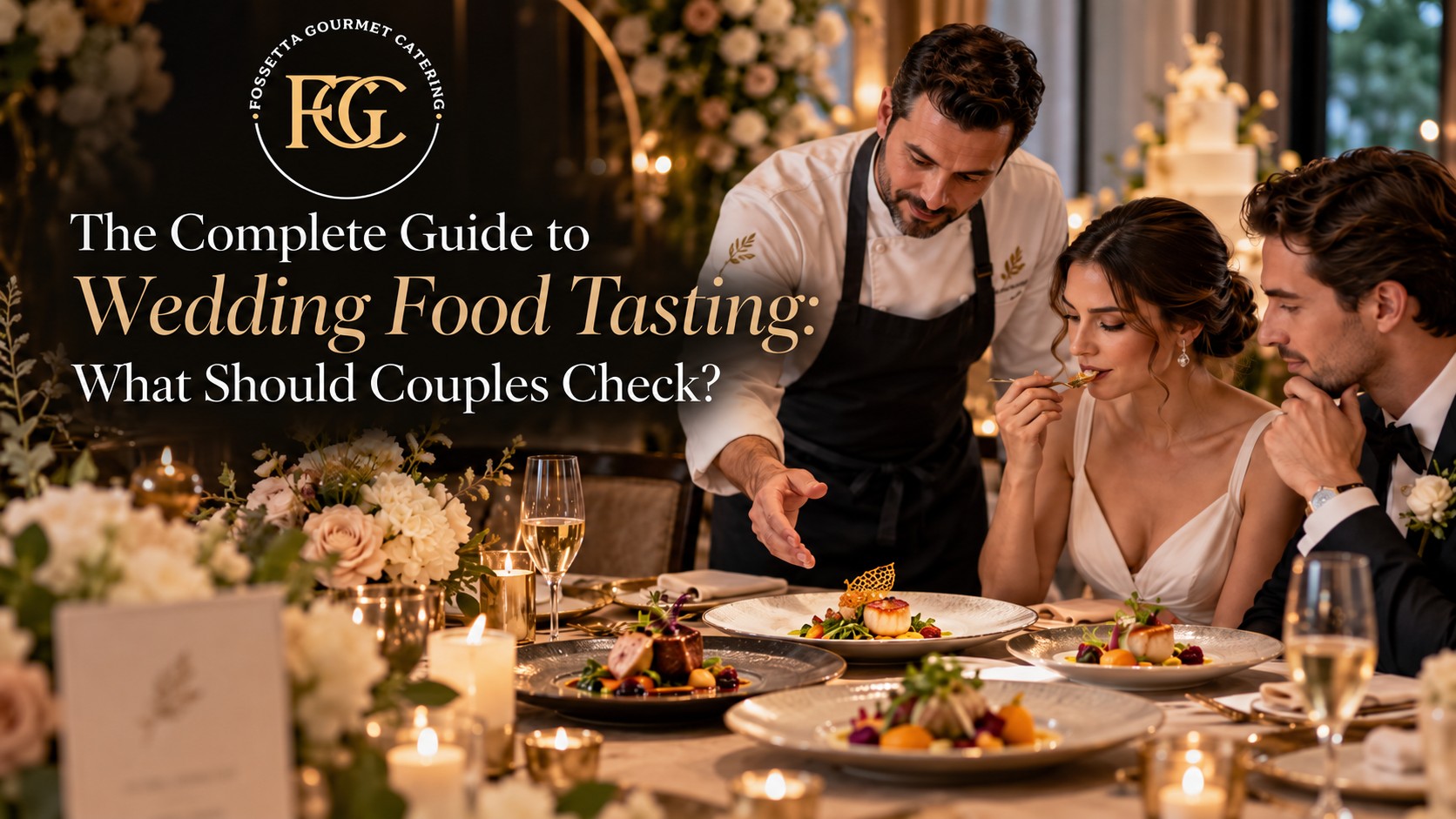
It is your opportunity to taste the dishes before the wedding, understand how the complete menu will flow, check presentation, discuss portion sizes, review dietary needs, and make changes before the final event.
For couples planning a premium or luxury wedding, food tasting becomes even more important because the menu is expected to feel refined, balanced, memorable, and well coordinated with the overall celebration.
At Fossetta Gourmet Catering, wedding dining is approached as an experience rather than simply a list of dishes. Couples can explore menu combinations, presentation styles, live food stations, guest preferences, and service formats before finalizing the food plan.
This guide explains exactly what couples should check during a wedding food tasting so they can make confident decisions before the big day.
A wedding food tasting is a planned session where couples sample selected dishes that may become part of the final wedding menu.
It gives you the chance to experience the food before guests do.
A tasting may include:
Depending on the size of the wedding, the caterer may not serve every single menu item during the tasting. Instead, the tasting usually focuses on the key dishes, signature items, and food categories that help couples understand the overall quality and style of the catering.
A menu can look excellent on paper, but written descriptions do not tell the full story.
A dish may sound impressive but still be too spicy, too rich, too sweet, too heavy, or simply unsuitable for your guest profile.
A tasting helps you answer practical questions.
Does the starter taste fresh?
Is the paneer soft?
Is the biryani aromatic without being too oily?
Does the dessert feel too sweet after a rich main course?
Will elderly guests find the spice level comfortable?
Does the plating feel elegant enough for the wedding?
These are the details that cannot be judged properly from a menu card alone.
The tasting should usually happen after the couple has finalized or shortlisted the caterer and has a reasonable idea of the wedding format.
Before scheduling a tasting, it helps to know:
The tasting should also be early enough that changes can still be made comfortably.
Avoid waiting until the final few days before the wedding.
Taste is the first thing everyone notices, but couples should go beyond simply asking whether a dish is “good.”
Look for balance.
Ask yourself:
The goal is not to make every dish intense.
A good wedding menu usually includes a mix of light, rich, fresh, comforting, and indulgent flavours.
Texture can completely change the experience of a dish.
During your wedding food tasting, notice whether:
A dish may have excellent flavour but still disappoint if the texture is wrong.
This becomes especially important when the same dish must be served to hundreds of guests.
Food temperature matters more than many couples realize.
A hot starter should arrive hot.
A chilled dessert should actually feel cold.
Freshly fried items should not feel soggy or lukewarm.
During the tasting, ask the caterer how food temperature will be maintained at the venue.
This is especially important for:
Good food can lose its impact very quickly when it is served at the wrong temperature.
Luxury catering is not only about taste.
Presentation also plays a major role.
Look at:
The food presentation should suit the overall wedding style.
A modern luxury wedding may need clean, minimal plating.
A royal wedding may work better with richer presentation and traditional serving elements.
The key is consistency.
Portion size should be carefully discussed during the tasting.
This is especially important for:
If early courses are too large, guests may become full before the main course.
If portions are too small, guests may feel the meal is not satisfying.
Ask the caterer whether the tasting portion is the same as the actual wedding portion.
One of the most important parts of wedding food tasting is understanding how the entire menu works together.
Every dish should not feel equally heavy.
For example, this may be too much:
Even if each dish is individually tasty, the full meal may feel tiring.
A better sequence may be:
The menu should feel like a journey.
Vegetarian food should never feel like an afterthought.
At Indian weddings, vegetarian guests often make up a large part of the guest list.
Check whether the vegetarian menu offers enough variety.
Instead of relying only on paneer, consider dishes using:
The vegetarian selection should feel just as premium as the non-vegetarian menu.
If your wedding includes non-vegetarian food, look for variety.
Avoid creating a menu where every dish is chicken-based.
You may consider:
The goal is not to include everything.
It is better to choose a smaller number of well-executed dishes than a very large menu with repetitive flavours.
Modern wedding menus often need to accommodate different dietary needs.
Discuss these clearly during the tasting.
Common requirements may include:
If guests have serious food allergies, ask how the caterer handles cross-contact and separate preparation.
This planning should happen before the wedding day.
Wedding food needs to work for a wide range of guests.
A spice level that feels perfect to the couple may be too strong for:
Ask whether selected dishes can be prepared at a moderate spice level without losing flavour.
Good flavour does not depend only on chilli.
Balanced spices, herbs, aromatics, and cooking technique matter just as much.
Indian wedding menus often include several breads, but this category is sometimes ignored during tasting.
Check:
Ask whether breads will be prepared live or in batches.
Fresh bread can significantly improve the main-course experience.
Rice is another important part of the meal.
During the tasting, check whether:
Rice dishes should support the main course rather than overpower it.
Live food stations are popular in luxury weddings because they create interaction and energy.
These may include:
If your wedding includes live counters, ask whether the tasting can include some of those items.
Check:
A live counter should feel exciting, not slow or confusing.
Desserts are often overdone at weddings.
More desserts do not necessarily mean a better dessert section.
Instead, choose variety.
A balanced dessert menu might include:
For example:
This gives guests variety without unnecessary repetition.
Couples often focus on food and forget the drinks.
Taste your beverages along with the menu.
Consider:
A heavy, sweet drink may not work well with rich food.
Refreshing beverages can make the overall meal feel lighter and more balanced.
This is one of the most important questions during a tasting.
A dish prepared for four people may taste excellent.
But can the same dish be prepared with the same quality for 300, 500, or 1,000 guests?
Ask the catering team:
This is where experience becomes extremely important.
Food quality and service quality go together.
Discuss whether your wedding will use:
A smaller wedding may work beautifully with plated dining.
A large Indian wedding may be better suited to a premium buffet combined with live stations and roaming starters.
Choose the format according to the venue and guest count.
The food should feel connected to the event.
For example:
A heritage wedding may suit traditional Indian flavours.
A modern luxury wedding may work well with contemporary presentation and global cuisine.
A destination wedding may include ingredients or dishes inspired by the location.
The menu does not need to match the décor literally, but it should support the overall mood.
Do not rely on memory.
After several dishes, flavours may start blending together.
Write simple notes.
For example:
Paneer Starter: Keep, reduce spice slightly.
Mushroom Kebab: Excellent, no changes.
Biryani: Good flavour, slightly less oil.
Dessert: Reduce sweetness.
Mocktail: Keep as it is.
These notes make final menu discussions much easier.
Bringing too many people to the tasting can make decisions difficult.
Ideally, include only the people who genuinely need to be involved.
This may include:
A smaller group usually leads to faster and clearer decisions.
During your wedding food tasting, ask practical questions such as:
These questions help couples understand how the final wedding experience will actually work.
If you arrive extremely hungry, almost everything may taste excellent.
Eat something light beforehand.
Your palate becomes tired after too many dishes.
Focus on the most important options.
Also consider presentation, portion, timing, texture, and practicality.
Avoid menus with too much repetition.
Remember that the menu needs to suit more than just the couple.
A dish that works beautifully indoors may be harder to manage at an outdoor venue.
At Fossetta Gourmet Catering, wedding catering can be planned around the couple’s taste, guest profile, event style, and overall dining experience.
The aim of a good wedding tasting is not simply to approve dishes.
It is to understand how the menu will come together as a complete experience.
Couples can use the tasting stage to discuss:
If you are planning a wedding and want to explore premium catering options, visit:
Before finalizing the menu, review:
If these points are handled properly, couples can finalize their wedding food menu with much greater confidence.
A wedding food tasting is one of the most valuable steps in wedding catering planning.
It gives couples the chance to experience the menu before the event, understand what works, identify what needs improvement, and make decisions before the wedding day.
The most important thing is to look at the menu as a complete dining experience.
Do the dishes work together?
Are the portions balanced?
Does the presentation suit the wedding?
Are vegetarian guests properly considered?
Can the caterer maintain the same quality for the full guest count?
Are the desserts and beverages balanced?
Can the food be served smoothly at the venue?
When couples ask these questions during the tasting, they can move beyond simply choosing dishes and create a menu that feels thoughtful, personal, and enjoyable for everyone.
A successful wedding meal should feel generous without becoming excessive, elegant without feeling complicated, and memorable without losing warmth.
That is what makes wedding catering truly special.