10 Creative Live Food Counter Ideas for a Luxury Wedding
October 27, 2026

Organising a corporate event comes with a long list of responsibilities. There's the venue to book, people to invite, presentations to prepare, and a schedule to manage. Somewhere between all these arrangements comes one detail that can make a noticeable difference to the guest experience: the food.
Imagine attending a day-long business conference where lunch is delayed, the buffet has long queues, and half the dishes have gone cold. Even if the presentations were excellent, those inconveniences would be difficult to ignore.
Now imagine the same event with refreshments served on time, a thoughtfully planned menu, and comfortable dining arrangements. Guests can enjoy their meals, have conversations, and return to the programme without unnecessary delays.
That's why corporate event catering in Gurgaon deserves proper planning.
Whether you're organising a small office lunch, an annual company celebration, an executive meeting, or a large conference, this guide will help you make practical catering decisions without overspending or overlooking important details.
Corporate event catering is the planning, preparation, and serving of food and beverages for business-related gatherings.
Unlike casual food delivery, professional corporate catering may involve several additional responsibilities, such as menu customisation, buffet setup, service staff, live cooking stations, equipment arrangements, and coordination with the event venue.
The exact services depend on the event and the catering package.
For example, a meeting with 15 senior executives may require neatly presented individual meals and discreet service. A company anniversary with 300 employees might work better with multiple food counters and a more relaxed buffet arrangement.
The food can be equally enjoyable at both events, but the way it is prepared and served should be different.
This is what makes corporate catering planning so important.
Gurgaon, also known as Gurugram, has a busy corporate environment, with offices and commercial establishments across areas such as Cyber City, Udyog Vihar, Golf Course Road, and Sohna Road.
Companies in these areas organise meetings, training programmes, conferences, celebrations, and client events throughout the year.
For organisers, the challenge isn't simply finding good food. It's ensuring that the catering works around the event rather than disrupting it.
A few practical considerations can make a difference.
Business events often follow a tightly planned agenda.
If a lunch break is scheduled for 45 minutes, the catering arrangement needs to accommodate the expected number of guests within that period.
Long queues, insufficient serving stations, or slow refills can affect the entire schedule.
When clients, business partners, or senior executives attend an event, hospitality becomes part of the company's overall impression.
You don't necessarily need an extravagant menu. Fresh food, appropriate presentation, and attentive service often matter more than the number of dishes.
Corporate gatherings can bring together people from different regions and backgrounds.
Some guests may prefer vegetarian meals, while others might request Jain food, vegan options, or dishes prepared without particular allergens.
Considering these requirements before the event makes the dining experience more comfortable and inclusive.
One of the most common planning mistakes is choosing a standard catering package without considering the nature of the event.
A menu that works for an office celebration may not be suitable for a formal boardroom meeting.
Let's look at how catering requirements change across different corporate occasions.
For formal meetings, simplicity usually works best.
Choose food that is easy to eat, requires minimal handling, and doesn't interrupt discussions.
Suitable choices may include grilled sandwiches, wraps, fresh salads, light Indian meals, and individually plated dishes.
It is also worth considering the service style. Staff moving frequently around the room can become distracting during important conversations.
For smaller executive gatherings, a pre-planned plated meal may provide a smoother experience than a buffet.
Conference catering requires careful attention to timing and guest movement.
A typical day-long conference may include:
Morning tea or coffee with light snacks
A mid-morning refreshment break
A buffet or plated lunch
Afternoon beverages and snacks
Evening refreshments, depending on the programme
If several hundred attendees enter the dining area simultaneously, a single buffet line may create unnecessary delays.
Multiple serving stations, clearly organised food sections, and a sensible lunch schedule can help manage the crowd.
A product launch often involves conversations, presentations, photography, and networking.
Guests may prefer light appetisers and beverages rather than a heavy sit-down meal.
Butler-passed snacks, small gourmet portions, and attractive food stations can work particularly well.
The food should be easy to enjoy while standing or interacting with other guests.
Presentation also deserves attention because serving counters may become part of the visual atmosphere of the event.
Office parties allow for a more relaxed menu.
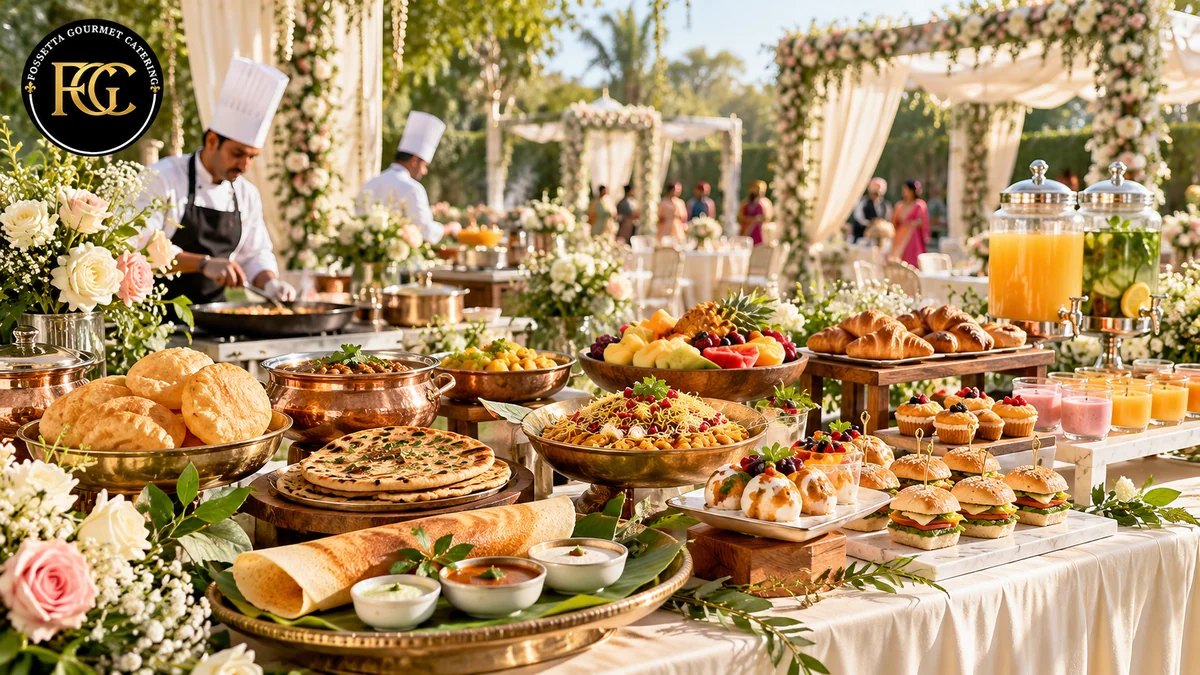
A combination of Indian favourites, international dishes, live cooking counters, and desserts can add variety.
For example, a company anniversary might include a chaat station, freshly prepared pasta, Indian main courses, and an assortment of desserts.
The important thing is to choose food that your employees will actually enjoy, rather than adding dishes simply to make the menu look longer.
A successful menu isn't necessarily the one with the most expensive ingredients or the greatest number of options.
It is one that suits the guests, timing, weather, and purpose of the event.
Before discussing food, get a reasonably accurate estimate of who will attend.
Think about their preferences, the event format, and any dietary requirements.
For an event involving international visitors, you may want to include familiar global dishes alongside Indian options.
For an office gathering with a predominantly Indian audience, regional favourites and well-prepared comfort foods may be more suitable.
Avoid assuming that all guests have similar tastes.
The event schedule should influence your menu.
Morning events: Fresh fruit, sandwiches, breakfast selections, tea, coffee, and lighter refreshments are practical choices.
Afternoon events: A balanced lunch with vegetables, rice, breads, protein options, and desserts can provide variety without becoming overwhelming.
Evening events: Passed appetisers, grilled dishes, selected live stations, and mocktails can suit networking sessions and celebrations.
For an event lasting several hours, spread refreshments across the programme rather than offering everything at once.
A long buffet can appear impressive on paper, but it may not always improve the experience.
When too many similar dishes are offered, guests can find the selection confusing, and maintaining freshness becomes more challenging.
A smaller menu with distinct flavours, thoughtful combinations, and good presentation is often more enjoyable.
For instance, instead of offering several rich paneer preparations, include one signature paneer dish alongside a seasonal vegetable preparation and a lighter option.
Balance is more valuable than repetition.
If you're planning an office lunch or conference meal, a combination of familiar flavours and practical serving options is a useful starting point.
Here is an illustrative menu that can be adjusted according to guest preferences and budget.
| Course | Suggested dishes |
|---|---|
| Welcome beverages | Fresh lime soda, iced tea, seasonal cooler |
| Vegetarian starters | Paneer tikka, vegetable kebabs |
| Non-vegetarian starters | Chicken tikka, grilled fish |
| Indian main course | Dal makhani, seasonal vegetable, paneer preparation |
| International options | Live pasta or selected Pan-Asian dishes |
| Accompaniments | Indian breads, rice, salads, raita |
| Desserts | Gulab jamun, mousse, seasonal dessert |
This is a planning example, not a fixed Fossetta menu.
The exact selection should depend on the event format, venue facilities, guest count, and dietary requirements.
For a shorter business lunch, a simpler menu may be more appropriate.
For an annual celebration or networking dinner, you could introduce additional interactive stations or signature dishes.
Choosing the right service format is just as important as choosing the dishes.
Each option offers a different guest experience.
| Catering style | Best suited for | Things to consider |
|---|---|---|
| Buffet | Office parties, conferences, large gatherings | Requires good crowd flow and timely refills |
| Plated dining | Boardroom lunches, formal dinners | Needs coordinated serving and advance menu planning |
| Live food counters | Networking events, annual celebrations | Requires extra space, cooking facilities, and staff |
| Packed meals | Training sessions, working lunches | Convenient, but offers less flexibility |
| Passed appetisers | Product launches, receptions | Works well for socialising and short events |
There is no single format that works best for every occasion.
For a formal corporate lunch with 20 attendees, plated service may be the most comfortable choice.
For an office celebration with 200 guests, a buffet with multiple serving points may be more practical.
A product launch, on the other hand, may benefit from a combination of passed appetisers and selected live stations.
A useful rule: Choose the service style according to how people will move, interact, and spend their time during the event.
Estimating food quantities is one of the biggest concerns for corporate event organisers.
Ordering too little creates an uncomfortable situation. Ordering far too much increases costs and food waste.
There is no universal quantity that works for every event because food consumption depends on several factors.
These include the duration of the event, age group of attendees, whether guests have already eaten, menu composition, and the type of service.
For practical planning, consider the following.
A single well-organised service area may be sufficient for many smaller gatherings.
Choose a focused menu and confirm whether everyone will eat at the same time.
For a working lunch, individual meals or a compact buffet may be convenient.
At this size, buffet layout and service speed become more important.
Consider whether guests can access food comfortably without forming one long queue.
If the lunch break is short, coordinating staggered entry or additional serving points may help.
For larger gatherings, food preparation, transportation, holding temperatures, staffing, and buffet refills need additional attention.
The caterer should help determine suitable serving capacity and kitchen requirements.
Discuss realistic attendance estimates, expected consumption, and contingency arrangements before the event.
Rather than guessing exact food quantities yourself, confirm portion planning with the catering team based on your final menu.
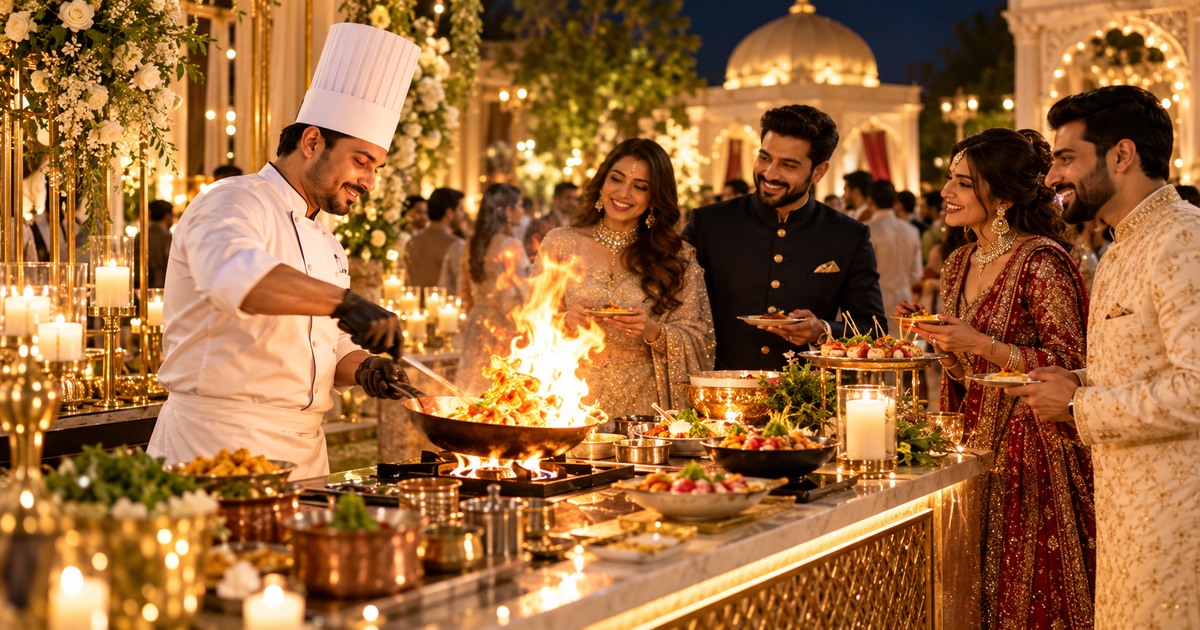
Live cooking stations do more than serve meals. They can also give guests something to enjoy and talk about.
A freshly prepared pasta counter, for example, allows guests to choose their preferred ingredients and sauces.
A chaat station offers familiar Indian flavours with an interactive serving experience.
For evening office celebrations, selected grill counters may also work well.
However, live counters aren't always practical.
They need sufficient space, appropriate power or fuel arrangements, safe food handling, and staff capable of managing queues.
At a tightly scheduled conference, a large number of live counters could slow down lunch service.
At a relaxed networking event, the same counters may become a highlight.
The best approach is to match the experience to the occasion.
If you've started comparing quotations from different corporate caterers, you may have noticed that prices can vary considerably.
That's because catering costs involve more than food ingredients.
Some of the main factors include:
Guest count: The number of attendees influences ingredient quantities, staffing, service equipment, and logistics.
Menu selection: Premium ingredients, specialist preparations, and elaborate multi-course menus may affect the overall cost.
Service style: Butler service, plated dining, and live cooking stations can require different staffing and equipment arrangements.
Event duration: Catering for a two-hour meeting is different from managing food service throughout a full-day conference.
Venue requirements: Transport, loading access, kitchen availability, electricity, and setup restrictions can influence operational costs.
Presentation: Custom buffet styling, speciality serving ware, and more elaborate food displays may add to the budget.
When requesting a quotation, ask for a clear breakdown of what's included.
Check whether taxes, transportation, serving staff, equipment, and setup charges are part of the quoted amount.
Tip: Compare proposals based on the complete service rather than choosing the lowest per-person price alone.
Good food won't create the intended experience if it arrives late or cannot be served efficiently.
This is especially important when organising events at office buildings, business centres, hotels, or temporary outdoor venues.
Before finalising your caterer, clarify a few practical details.
Some commercial buildings have specific loading areas, security procedures, or delivery restrictions.
Confirm these requirements with the venue in advance and share them with your catering team.
Find out whether the venue has a suitable preparation area.
If cooking isn't permitted on-site, the catering plan may need to focus on food prepared elsewhere and transported under appropriate conditions.
Check the available area for buffet counters, beverages, guest movement, and staff access.
A beautifully presented buffet won't be comfortable if the layout blocks an entrance or creates congestion.
Hot and cold foods need appropriate storage and serving arrangements.
For events lasting several hours, ask how the caterer plans to maintain food quality and safe temperatures.
Confirm when the catering team can enter the venue and when equipment must be removed.
These details may seem minor, but they can affect the entire event schedule.
Before choosing a catering company, have a detailed conversation about your event.
These seven questions can help you compare providers:
Have you handled corporate events of a similar size and format?
Can the menu be customised for our guests and dietary requirements?
What is included in the quotation, and what costs extra?
How will the food be transported, stored, and served safely?
How many service staff and serving points do you recommend?
Can you coordinate setup with the venue and our event management team?
What happens if the guest count or event schedule changes?
Clear answers are more useful than impressive promises.
A reliable catering partner should understand both the hospitality side and the operational requirements of a business event.
You don't need an overly complicated system to organise event catering.
A straightforward planning timeline can make the process easier.
Confirm the event format, venue, approximate attendance, budget, and catering requirements.
For major conferences or large celebrations, start earlier.
Discuss menu options, service format, dietary requirements, and logistical arrangements with your chosen caterer.
Arrange a tasting if appropriate for the scale and importance of the event.
Review the guest count, event schedule, serving layout, and any venue restrictions.
Confirm who will be responsible for coordination on both sides.
Share the final agreed guest count and dietary information within the caterer's required deadline.
Double-check setup time, contact details, and service schedule.
Assign one point of contact to coordinate with the catering supervisor.
This avoids confusion and allows your team to concentrate on hosting the event.
Even experienced event planners can overlook small details that affect the dining experience.
One mistake is planning an elaborate menu without considering the time available for guests to eat.
Another is assuming that a single buffet counter will be sufficient for every event size.
Dietary preferences may also be collected too late, leaving the catering team with limited time to make suitable arrangements.
Unclear quotations are another avoidable issue. If staffing, equipment, and transportation aren't discussed upfront, unexpected costs can arise.
And finally, avoid making menu decisions based only on visual presentation.
At a corporate event, freshness, flavour, timing, hygiene, and service quality matter just as much as appearance.
Every business event has its own requirements.
A formal executive lunch calls for a different experience from an annual office celebration. A product launch may need elegant appetisers and creative presentation, while a day-long conference requires efficient meal service.
Fossetta Gourmet Catering provides customised catering solutions for corporate events across Gurgaon and Delhi NCR.
Its corporate catering offerings include boardroom lunches, business conferences, networking events, employee celebrations, and large corporate gatherings.
Fossetta's approach brings together Indian and international cuisines, thoughtful food presentation, and service options tailored to the event.
Businesses can explore Fossetta's corporate catering services or browse the available menu options before discussing their requirements.
If you're planning a corporate event, sharing your guest count, preferred menu, venue details, and event schedule is a useful first step towards creating a suitable catering plan.
Get in touch with Fossetta Gourmet Catering
Location: 42, Udyog Vihar 6, Sector 37, Gurgaon, Haryana – 122001
Phone: +91 9811747715 / +91 9999850265
Email: info@fossetta.in
Website: https://fossetta.in/
The best option depends on your guest count, venue, event duration, and schedule. Buffet catering often suits large office gatherings, while plated meals may work better for formal meetings. Live food counters can be suitable for networking events and celebrations.
There is no single standard price. Costs vary according to menu selection, guest count, service format, staffing, and venue logistics. Request a customised quotation that clearly explains the inclusions.
For smaller office meetings, catering arrangements may be possible with shorter notice. For large conferences, annual celebrations, or events requiring elaborate setups, planning several weeks or more in advance is advisable.
Many corporate catering providers can accommodate these preferences through advance menu planning. Share specific requirements early and confirm ingredient and preparation details with the caterer.
Buffets offer greater menu flexibility and are often convenient for larger groups. Plated meals provide a more structured dining experience and can suit executive meetings or formal dinners. Choose based on the event schedule and service requirements.
Share the event date, location, expected guest count, event timing, preferred cuisine, dietary requirements, service style, and approximate budget. These details help caterers prepare a more relevant proposal.
Yes. Fossetta Gourmet Catering offers corporate catering services in Gurgaon and Delhi NCR for business lunches, conferences, networking events, office celebrations, and other corporate gatherings. You can contact the team to discuss customised catering requirements.
A successful corporate event doesn't always need an extravagant menu. What matters is that the food suits the occasion, guests feel comfortable, and the dining experience fits naturally into the event.
From choosing the right service style to managing food quantities and coordinating with the venue, thoughtful planning can make a significant difference.
If you're looking for corporate event catering in Gurgaon, focus on quality, flexibility, food safety, and clear communication with your catering partner.
When those details are handled well, the food becomes something guests enjoy rather than something organisers have to worry about.